I’ve been wanting to write about this “chasen controversy” for quite some time.
With the recent matcha boom, more and more KOLs and content creators on social media have started sharing matcha-related content. As videos need to be constantly updated, creators naturally have to keep looking for new topics. After matcha itself, it seems that chasen (bamboo tea whisks) are now having their moment.
Recently, we have seen more and more videos promoting “black bamboo chasen” and “shin-chasen” as the most premium and professional choices, creating the impression that ordinary white bamboo chasen are somehow no longer professional enough.
But are they really more suitable — or simply more expensive?
(This article mainly discusses bamboo chasen and does not cover long-handled chasen.)
White Bamboo Chasen — “Hyakubon-date” and “Hachijubon-date” Are Already Enough for Most People
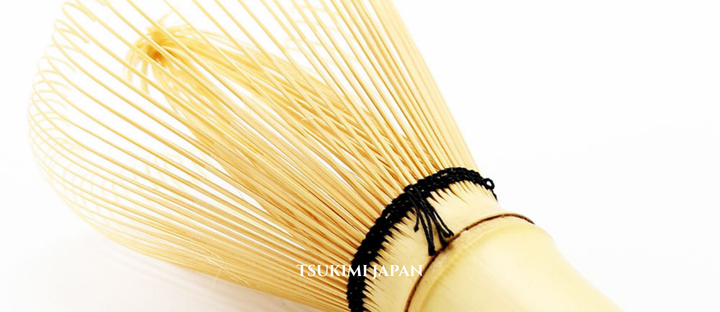
If you usually make usucha (thin tea), where the goal is to create a good layer of foam, or if you mainly use a chasen for matcha lattes, desserts, and other drinks, a white bamboo chasen is already more than sufficient.
For most everyday users, a “Hyakubon-date” (100-prong) or “Hachijubon-date” (80-prong) chasen can handle most needs.
Some of the “black bamboo” or “shin-chasen” promoted in videos are relatively expensive, and they are not necessarily suitable for everyone. For beginners, some chasen with fewer prongs or thinner handles can actually require more skill and practice to control.
The number of prongs, shape, and type of bamboo can all affect the feel and performance of a chasen. But more expensive does not necessarily mean more suitable for you.
Black Bamboo Chasen Does Not Mean “More Premium”
Another type that has recently attracted a lot of attention is the black bamboo chasen.
Many introductions simply describe black bamboo as being more premium and more professional.
But the quality or suitability of a chasen has never been determined simply by its colour.
Black bamboo chasen have their own historical and traditional background in Japanese tea culture. Certain tea ceremonyschools and styles use black bamboo chasen, while black bamboo chasen may also be used in non-foaming styles of tea preparation as an alternative to the much rarer susudake (smoked bamboo) chasen.
In other words, different tea ceremony schools and different ways of preparing matcha naturally call for different types of chasen.
That does not mean one is automatically “higher quality” than another.
Just as matcha bowls come in different shapes, chasen are also chosen according to their intended use, tea school, preparation method, and personal preference.
So, just because black bamboo has suddenly become popular online, it does not mean white bamboo chasen are no longer professional enough.
Also, black bamboo does not necessarily mean naturally black bamboo.
Some black-coloured chasen on the market, particularly those made outside Japan, may achieve their colour through dyeing or other treatments. This is something worth paying attention to when making a purchase.
Are “Japanese Chasen” Really All Made in Japan?
In recent years, the Japanese market has seen more relatively inexpensive chasen being sold while simultaneously being labelled “Made in Japan.”
Some chasen brands that were previously rarely seen also seem to have suddenly become available in stable and large quantities.
But if you understand how traditional Japanese chasen are made, you will know that:
A chasen genuinely handcrafted in Japan using traditional techniques is not something that can simply be mass-produced within a short period of time.
Chasen production involves multiple processes and requires considerable time, skill, and experience.
So, how are some of these chasen that are available in large and stable quantities actually being produced?
In recent years, a significant number of Chinese-made chasen have appeared on the market.
There is nothing wrong with using a Chinese-made chasen.
The real issue is whether the country-of-origin information is truthful.
If a product is made in China, there is nothing wrong with that, as long as its country of origin is clearly and honestly stated. Consumers can then make their own choice based on their budget and needs.
The problem arises when a product is actually made outside Japan but is packaged and sold as “Made in Japan” or “Japanese artisan-made,” leading consumers to believe that they are purchasing a traditional Japanese chasen. That is an entirely different matter.
More importantly, some products are even deliberately priced close to Japanese-made chasen, making it difficult for consumers to distinguish authenticity based on price alone.
When the packaging and product information are deliberately designed to resemble Japanese-made products, the original clues that could help identify the country of origin become increasingly unclear. Consumers are then left with fewer ways to verify the actual origin themselves. Often, it is only through actual use and comparison that the differences gradually become apparent.
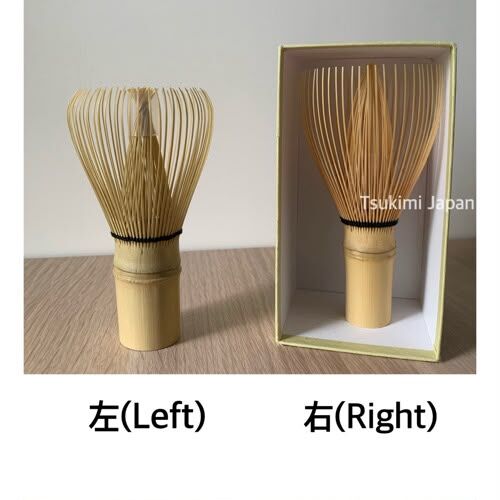
Why not take a look at the “Japanese chasen” you currently own?
Left:A white bamboo “shin-chasen” claimed to be made in Japan Right: A white bamboo "shin-chasen" from a long-established chasen maker in Nara
A customer once shared the following experience with us:
They purchased a chasen through an online KOL that was advertised as a “Japanese-made shin-chasen.”
However, after using it, they noticed obvious differences in the shape, craftsmanship, and handling compared with Japanese-made chasen they had used previously. They also found it more difficult to produce the desired foam.
In the end, they felt that the HK$300-$400 chasen they had purchased looked very similar to comparable products selling for around HK$50 in the mainland China market.
"When consumers choose a Japanese-made chasen, it is often because they trust its craftsmanship and quality.
Therefore, what truly matters is not simply the price, but whether the stated country of origin is genuine."
Before Buying a Chasen, Ask Yourself Three Questions:
🍵 What do I actually use matcha for?
Usucha? Koicha? Matcha latte? Drinks? Desserts?
🍵 What style of matcha preparation do I use?
Different tea ceremonyschools and preparation methods have different requirements for chasen.
🍵 What do I actually need?
Don’t assume that you need a particular type of chasen simply because it suddenly becomes popular online.
One Last Thought
A chasen is not about what is “trendy” or “outdated,” nor is there an absolute “high” or “low” grade.
What matters is whether it is right for you.
And just because someone says a particular chasen is the “most premium” or “the best,” you do not necessarily need to follow the trend.
Choosing the chasen and tea tools that suit you is far more important than following online trends.