Shifts in Matcha Quality Orientation amid Market Expansion
In recent years, the global demand for matcha has increased rapidly, prompting tea producers across Japan to adjust their cultivation strategies in order to expand the supply of matcha raw materials. However, against the backdrop of this rapid expansion, an increasing number of products on the market have come to emphasize surface attributes—such as a vivid green color and pronounced bitterness—often at the expense of the aromatic complexity, umami expression, and overall balance traditionally valued in matcha.
This shift in quality orientation is not confined to any single production area. Both Uji and Yame have, in earlier periods, experienced issues related to uneven quality and misleading commercial labeling¹. Under such circumstances, as matcha is increasingly interpreted through narrow sensory indicators, the nuanced flavor characteristics developed within certain production regions are more likely to be oversimplified or even misinterpreted.
Common Misinterpretations in Flavor Perception
Taking Hoshino matcha as an example, some first-time drinkers describe its aroma or flavor as nutty or reminiscent of roasted notes², which differs from the conventional image often associated with Uji matcha. However, sensory descriptions are inherently subjective and vary according to individual background and experience. Moreover, such flavor impressions do not necessarily indicate the intentional use of high-temperature or roasting processes.
The True Role of Hi-ire in Traditional Tea Processing
In traditional Japanese tea production, hi-ire has long been an essential and integral process, widely applied not only to sencha and gyokuro but also to tencha. Its purpose lies in stabilizing quality and refining the overall flavor profile, rather than simply imparting roasted characteristics.
Even in high-quality matcha, temperature and duration are carefully adjusted according to climatic conditions, the state of the raw material, the intended flavor direction, and the experience of the tea master. When properly executed, hi-ire can produce a subtle and pleasant hika (gentle fire aroma)³ that enhances aromatic depth and enriches the flavor without obscuring the intrinsic qualities of the tea leaves.
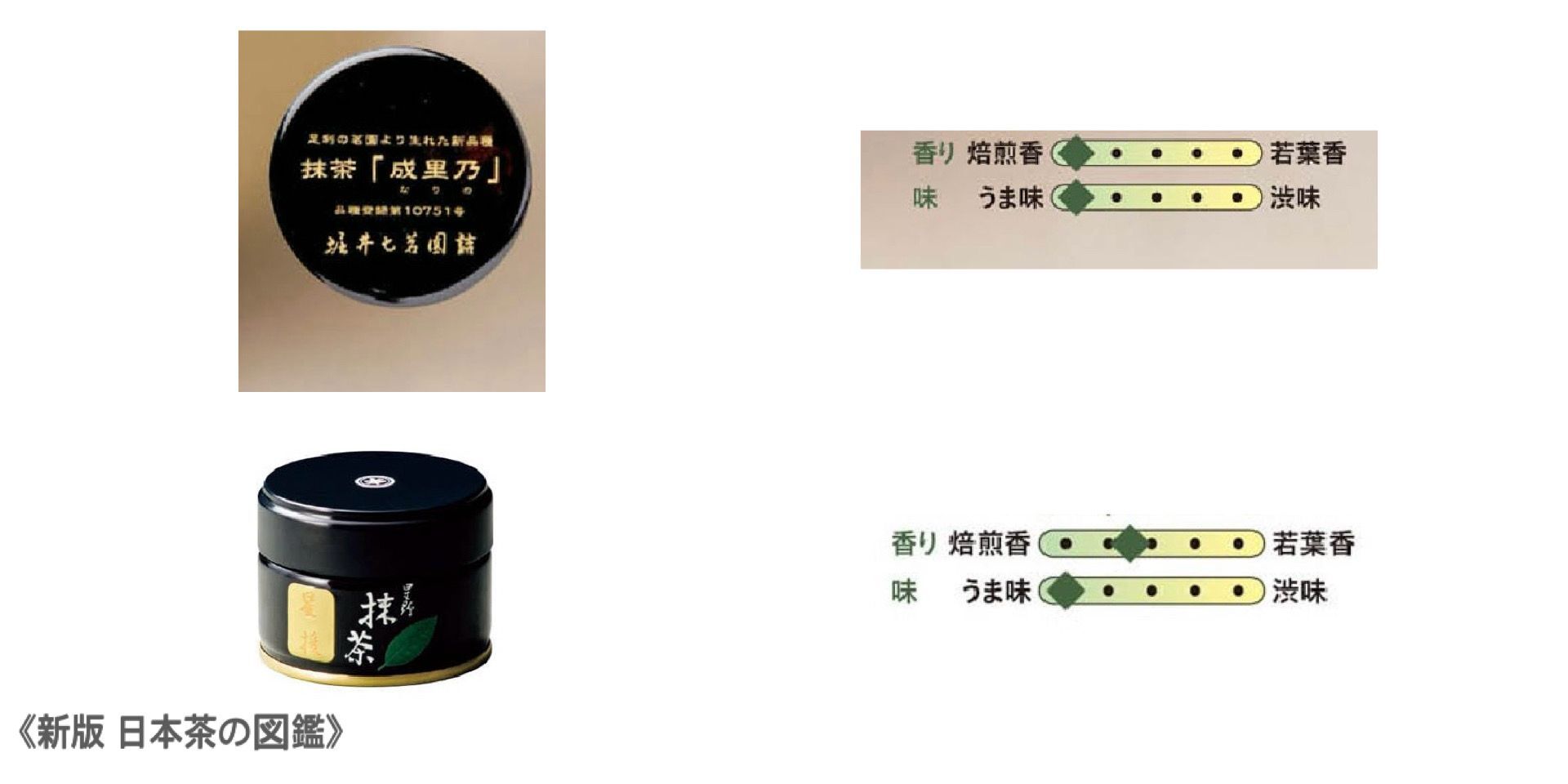
For this reason, the quality and flavor direction of matcha cannot be reduced to a simplistic dichotomy of “high fire” versus “low fire,” nor can the presence of roasted impressions alone be used to determine quality. According to flavor profile data presented in The Revised Encyclopedia of Japanese Tea, for example, the aroma category of “roasted notes” is more pronounced in “Uji Matcha Narino” than in “Hoshino Matcha Seiju.” Such differences suggest that variations in flavor are more accurately attributed to terroir and production philosophy than to any single processing step.
Misrecognition of Umami (Umami) Sensations
In addition, some drinkers occasionally mistake the umami (umami) present in matcha for a “sea-like” or “salty” flavor². This perception generally stems from unfamiliarity with umami as a taste modality, rather than from any abnormal flavor inherent to the matcha itself. When relevant sensory experience is lacking, individuals tend to rely on familiar taste memories as points of reference, which may result in misinterpretation of the overall flavor structure. This phenomenon is fundamentally similar to the tendency to equate roasted impressions directly with high-temperature processing.
The Essence of Tea Flavor: A Result of Interconnected Factors
It is worth noting that whether in the case of Hoshino matcha or tea farmers whose work is rooted in sencha, gyokuro, and other forms of Japanese tea developed in response to tea ceremony practices or local consumption needs, flavor profiles are shaped by the long-term accumulation of natural conditions and tea-making culture.
Growing environment, cultivar selection, cultivation methods, harvesting practices, and processing techniques are all closely interlinked. These elements cannot be replicated by producers in other regions—or even within the same prefecture—through a single processing adjustment alone.
The aroma and taste of matcha are thus the result of multiple interacting factors, while the accumulated sensory judgment and experience of the tea maker also play a decisive role in shaping the final expression.
As we consistently emphasize, matcha should not be evaluated solely on the basis of color. Its true value lies in overall flavor balance and harmony. Differences in flavor orientation among regions and producers are precisely what give Japanese tea its richness and diversity. Taste, after all, is subjective—and finding a flavor that resonates personally is, in itself, more than enough.
2. Individual Differences in Taste Preference and Perception
Taste preferences and sensory interpretations vary from person to person, and factors such as life background and cultural upbringing play important roles. For further discussion on this topic, see the following article:
👉 https://www.tsukimixjapan.com/blog/posts/matcha-seaweed-flavor
3. Hika (ひか)
Hika refers to the aromatic compounds generated during the tea production process (especially drying). Even when using the same tea leaves, the specific methods and intensity of processing affect the flavor and aroma of the final product, and this particular aroma is referred to as hika (ひか).